 q4WsCvLajdd4
Changes in atmospheric moisture arriving from the Atlantic may have played a larger role in the ancient Mediterranean water cycle than previously recognised. A study published in Nature Geoscience on 20 November 2026 links repeated episodes of lower Mediterranean salinity with stronger winter precipitation along the Atlantic Iberian Margin. The findings help explain how changes in the atmosphere could influence deep-water circulation and the preservation of organic-rich sediment on the seafloor.
Why the Mediterranean is unusually salty
The modern Mediterranean loses more water through evaporation than it receives from rainfall and rivers. The deficit is balanced by an inflow of relatively less salty Atlantic water through the Strait of Gibraltar, while saltier Mediterranean water flows outward at depth. This exchange helps maintain the basin’s salinity structure and contributes to the circulation of its deeper waters.
Over geological time, the balance has not remained constant. During some intervals of the Pleistocene, the Mediterranean became fresher. Lower surface salinity reduced the density contrast that helps drive deep-water formation and ventilation. In parts of the basin, reduced renewal of deep water contributed to low-oxygen conditions and the preservation of dark, organic-rich layers called sapropels.
What are sapropels?
Sapropels are sediment layers enriched in organic matter, commonly associated with episodes when bottom waters became oxygen-poor. When oxygen is limited, organic material can be preserved more effectively instead of being broken down completely by organisms and chemical reactions at the seafloor. Sapropels therefore provide a record of past changes in productivity, circulation and oxygen conditions.
Their formation has often been linked to changes in freshwater supply, including stronger Nile discharge or greater precipitation over the Mediterranean region. The new study examines another part of the water budget: the transport of atmospheric moisture from the Atlantic into the wider Mediterranean region.
How the researchers reconstructed rainfall
The research team compared records from marine sediment cores collected along the Atlantic Iberian Margin with evidence for surface salinity in the western Mediterranean. One key record came from International Ocean Discovery Program Site U1385. The researchers used the sedimentary ratio Ln(Zr+Ti)/K as a proxy related to the delivery of river-derived material, which can help reconstruct changes in winter precipitation on the nearby margin.
They examined the records over approximately the last 350,000 years. The comparison showed that low-salinity events and sapropel intervals repeatedly coincided with stronger winter precipitation along the Iberian Margin, a major route through which Atlantic-sourced atmospheric moisture can reach the Mediterranean region.
A sediment proxy is not a direct measurement of rainfall. Its meaning depends on the minerals, sediment sources and processes that deliver material to the core site. The researchers interpret it alongside other records, and the strength of the conclusion comes from the repeated timing relationship between independent indicators rather than one measurement alone.
A possible atmospheric pathway
The study associates wetter intervals with lower winter atmospheric pressure over the mid-latitude Atlantic. Such pressure patterns can favour the movement of moisture toward southern Europe and the Mediterranean. The authors suggest that these conditions may have been connected to negative phases of the North Atlantic–Arctic Oscillation, a pattern of atmospheric variability that influences winds and storm tracks across the region.
When more Atlantic moisture is transported toward the Mediterranean, precipitation can increase and the net export of water vapour from the basin may be reduced. This can alter the freshwater balance and contribute to lower salinity. The effect is not simply that rain falls directly onto the sea: atmospheric transport, river runoff, evaporation and exchange through Gibraltar all interact.
What the findings do—and do not—show
The research offers evidence that Atlantic moisture transport was an important driver of repeated Mediterranean freshening during the period examined. It does not mean that every sapropel in the entire geological record formed for exactly the same reason, nor does it remove the role of Nile discharge, regional rainfall or changes in ocean circulation. Different events may involve different combinations of processes.
There are also limits to what sediment cores can reveal. A core samples one location, and the proxy record depends on sediment delivery and preservation. Age models have uncertainty, and two records that appear to align may not resolve every short-lived change. Further work across additional sites can test how widely the atmospheric signal was expressed.
Why a past water cycle matters today
The study is a reminder that sea salinity and deep-water ventilation are linked to more than local rainfall. Large-scale atmospheric circulation can shift where moisture travels, changing the balance between evaporation, precipitation and runoff. Reconstructing these relationships helps scientists understand the range of natural variability in the Mediterranean climate system.
Past sapropel events occurred under orbital and climate conditions that differ from today, so they are not a direct forecast of modern Mediterranean change. Their value is that they reveal mechanisms that can operate when the atmosphere, rivers and ocean respond together. The new evidence adds Atlantic moisture transport to the set of processes geologists and climate scientists must consider when reading the Mediterranean’s sedimentary record.
Research source: Sierro, F. J. et al., “Mediterranean low-salinity and anoxic sapropel events triggered by Atlantic atmospheric moisture,” Nature Geoscience, published 20 November 2026. DOI: 10.1038/s41561-026-02141-8.
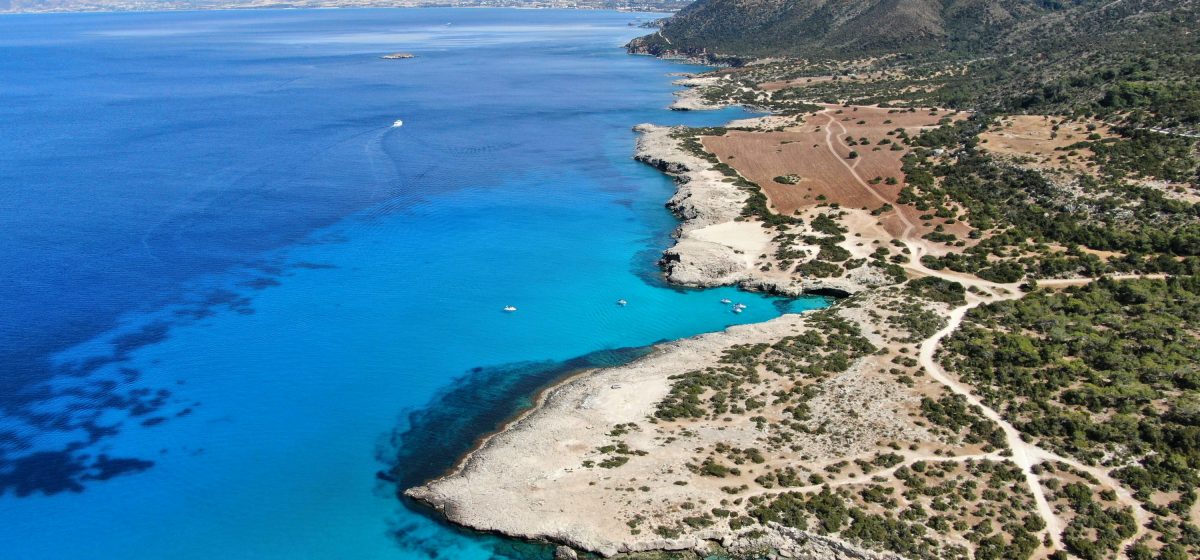
Image: Rocky Mediterranean coastline. Photo by Secret Travel Guide / Unsplash; illustrative coastal image, not a research-site photograph.