 q4WsCvLajdd4
Antarctica’s modern landscape hides a much older geological story. New research announced on 19 November 2026 reports evidence for enormous ancient mountain-building events beneath the ice, offering fresh clues to how the supercontinent Gondwana assembled and how its changing landscapes may have influenced later environments.
What the new announcement describes
The Australian National University reported that an international research team identified evidence for previously unrecognised, Himalayan-scale mountain roots associated with the assembly of Gondwana. The mountain-building events are placed broadly between about 650 and 450 million years ago, when Antarctica was involved in major collisions with neighbouring continental blocks including India and Africa.
The ranges themselves have long since been eroded and their deep roots are now concealed beneath the Antarctic ice sheet. The study does not describe a modern mountain chain suddenly discovered at the surface. Instead, it reconstructs ancient tectonic events from mineral evidence preserved in sediments along the continental margin.
Tiny zircon grains preserve a long record
A central part of the research involved analysing 1,712 detrital zircon grains. Zircon is a durable mineral that can survive weathering, transport and burial. It can incorporate uranium when it crystallises, while usually excluding much of the lead that would otherwise be present. Over time, uranium decays to lead at a predictable rate, allowing scientists to estimate the age of crystallisation.
Detrital zircons are grains eroded from older rocks and carried into younger sediment. Their ages and chemical characteristics can reveal information about the source regions that supplied the sediment. A group of grains with related ages may point to a period of magma formation or mountain building in the wider region.
Zircon evidence is powerful, but it must be interpreted carefully. A grain’s crystallisation age is not automatically the age of the sediment that contains it, nor does it by itself identify the exact location of the original mountain range. Researchers combine age data with geochemistry, regional geology and other evidence to reconstruct the likely source and tectonic history.
How Gondwana came together
Gondwana was a vast southern supercontinent that included what are now Africa, South America, Antarctica, Australia, India and other landmasses. Its assembly involved the movement and collision of continental blocks over hundreds of millions of years. When continents collide, crust can be shortened and thickened, producing mountain belts. Deeply buried rocks may be heated and transformed, while uplift and erosion gradually expose or remove the upper parts of the range.
Over geological time, the visible mountains can disappear while deeper roots remain within the crust. Later ice, erosion and tectonic changes may further modify the region. Antarctica’s ice cover makes direct observation difficult, which is why mineral records carried into sedimentary basins are especially useful.
Why ancient mountains matter for life and climate
Mountain building can influence more than the shape of continents. Uplift exposes fresh rock to weathering, and chemical reactions between rocks, water and the atmosphere can alter the movement of nutrients and carbon through the Earth system. Large mountain belts can also affect ocean circulation, sediment delivery and regional climate patterns.
The research announcement suggests that these ancient tectonic events may help scientists investigate environmental changes around the time of the Cambrian diversification of animal life. This is an important research question, not proof that mountain building alone caused biological evolution. The emergence and diversification of life involved many interacting biological, chemical and environmental processes.
What remains uncertain
Reconstructing a vanished mountain system from mineral grains involves uncertainty. Sediment can travel long distances, multiple source regions can contribute to one deposit, and later geological events can modify the record. Additional sampling, improved dating and comparison with other Antarctic geological data will help test the proposed reconstruction.
It is also important to distinguish the evidence for ancient mountain-building events from the modern ice-covered landscape. The study helps reveal what may lie beneath the ice in a geological sense; it does not mean the buried mountain roots can be mapped everywhere with equal confidence.
A new way to read the Antarctic continent
The announcement is a reminder that continents preserve evidence far beyond what can be seen at the surface. Tiny minerals can carry information about vanished mountains, ancient collisions and the changing architecture of a supercontinent. As researchers combine geochronology, geochemistry and geophysical observations, Antarctica’s hidden geological history is becoming clearer.
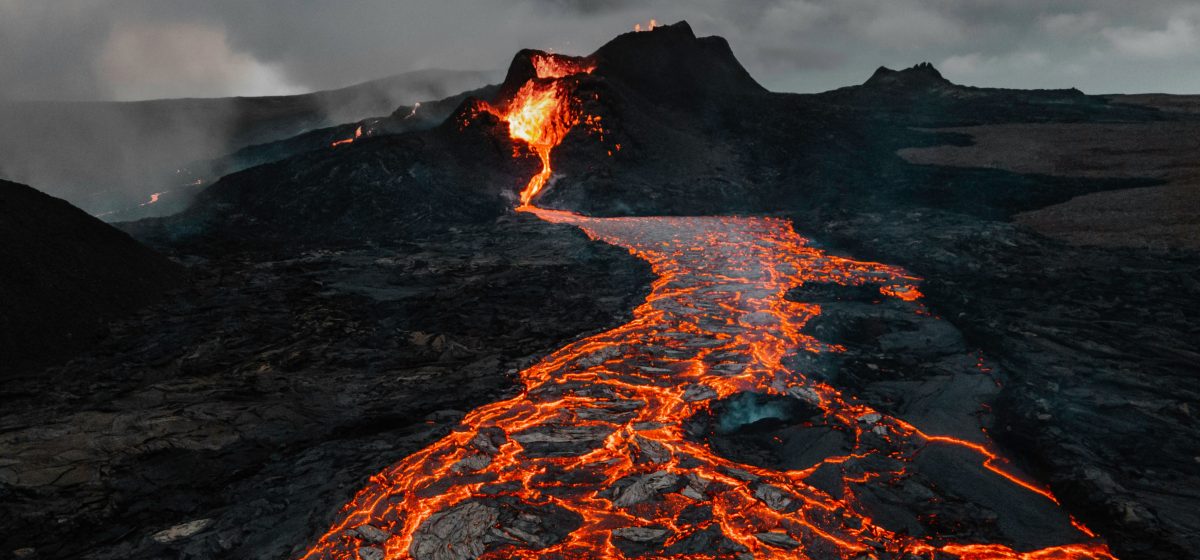
Illustrative image: Tetiana GRY / Unsplash. The photograph is not an image of the Antarctic mountain roots described in the research.