 q4WsCvLajdd4
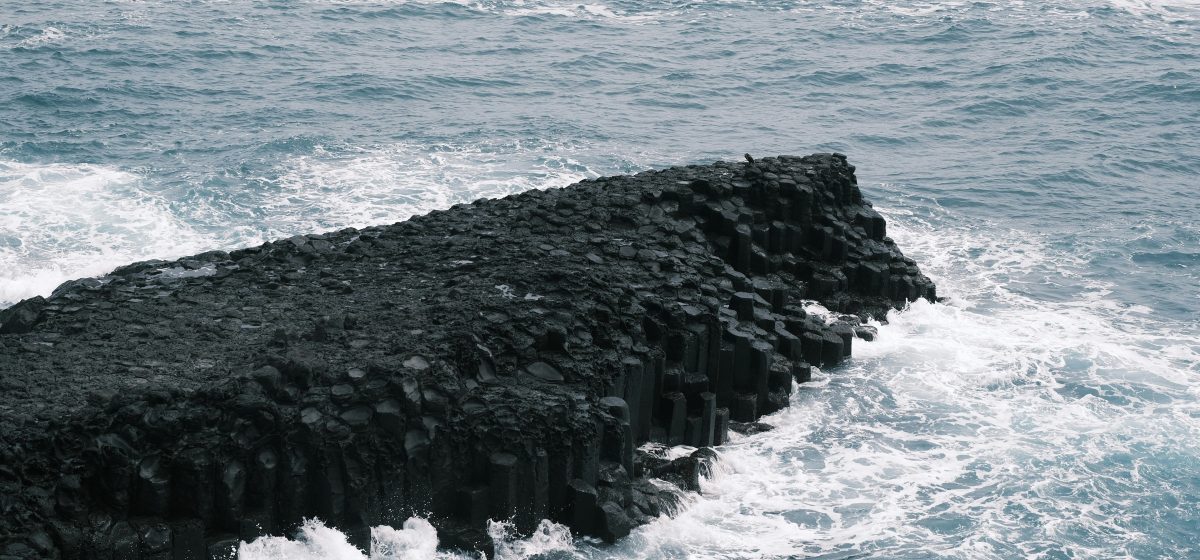
Most of Earth’s surface is covered by ocean, yet the rocky floor beneath it is constantly being renewed. Oceanic crust forms at underwater mountain chains, changes as seawater circulates through it and is eventually carried back into the deep Earth at many subduction zones. This cycle links volcanism, chemistry, heat flow and plate tectonics.
Where new ocean floor begins
New oceanic crust is mainly produced at mid-ocean ridges, long underwater mountain systems where tectonic plates move apart. As the plates separate, hot mantle rock rises to replace the space. Pressure decreases during this upward movement, allowing part of the mantle to melt. The resulting magma is generally basaltic in composition and can cool below the seafloor or erupt onto it.
Basalt forms much of the upper oceanic crust. Beneath it, slower cooling magma can crystallise into coarser-grained gabbro. The exact structure varies along a ridge because magma supply, spreading rate and local tectonic conditions are not uniform. Some sections are dominated by volcanic layers, while others expose deeper rocks through faulting.
Why the seafloor has a layered structure
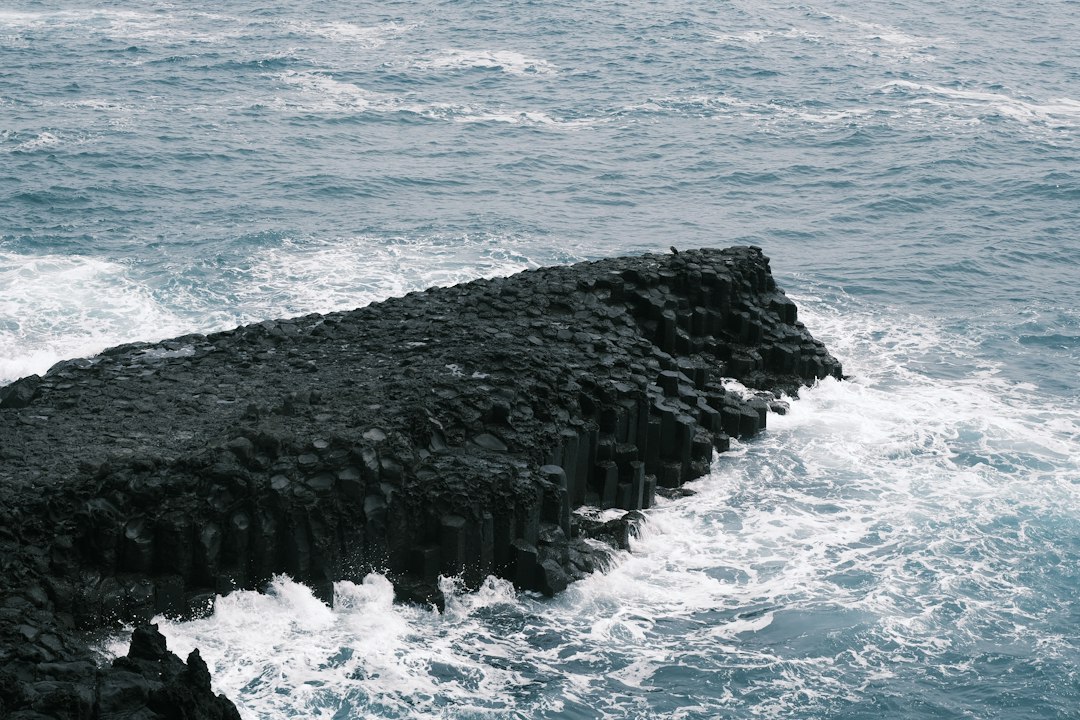
A simplified model of oceanic crust includes pillow basalts and sheeted dikes near the top, with gabbroic rocks at greater depth. Pillow lavas form when molten basalt erupts underwater and cools rapidly against seawater, creating rounded, overlapping forms. Dikes are tabular intrusions that feed magma toward the surface. Gabbro crystallises more slowly, allowing larger mineral crystals to grow.
Below the crust lies the uppermost mantle, commonly made of peridotite. The boundary between crust and mantle is not always a simple, sharp surface in nature, but the layered model provides a useful starting point for understanding oceanic lithosphere.
Seawater changes the rocks
Oceanic crust does not remain chemically unchanged after it forms. Cold seawater can enter cracks and pores, circulate through warm rock and return to the ocean through hydrothermal vents. This process, known as hydrothermal alteration, changes minerals and transfers chemical elements between seawater and the crust.
At high temperatures, water-rock reactions can produce new minerals and alter the chemistry of basalt. At lower temperatures, oxidation and other reactions continue as the crust moves away from the ridge. These changes influence the density, strength and water content of the oceanic plate.
Hydrothermal systems also support unusual ecosystems. Microorganisms can use chemical energy from reactions involving hydrogen, methane and sulfur compounds. In some settings, animals live around vent communities that depend on microbial production rather than sunlight reaching the seafloor.
Why oceanic crust eventually sinks
As oceanic lithosphere moves away from a ridge, it cools and becomes denser. Older seafloor is generally deeper than young seafloor because the underlying mantle lithosphere thickens as it cools. At convergent plate boundaries, dense oceanic lithosphere can descend beneath another plate in a process called subduction.
Subduction transports water-bearing minerals and altered crust into the mantle. As the descending plate heats and changes, some fluids are released into the overlying mantle wedge. These fluids can lower the melting temperature of mantle rocks and contribute to magma generation above the subduction zone. This is one reason volcanic arcs commonly develop near ocean trenches.
A cycle with important variations
Not every piece of oceanic crust follows an identical route. Some fragments are scraped off and added to the edge of a continent. Others may be trapped in mountain belts or preserved as ophiolites—slices of oceanic lithosphere exposed on land. These rocks allow geologists to study parts of the ocean floor without visiting deep water.
Subduction also does not recycle every component at the same rate. Some elements and fluids return to the surface through volcanism, while others can travel deeper into the mantle. The balance depends on temperature, pressure, mineral reactions and the age and composition of the incoming plate.
Why the ocean floor matters
The creation and recycling of oceanic crust help regulate Earth’s internal heat, shape ocean basins and influence the long-term chemistry of the planet. It also connects deep geological processes with surface environments through hydrothermal circulation and volcanic activity. Studying the seafloor is therefore essential to understanding Earth as an interconnected system.
Further reading: NOAA Ocean Exploration — seafloor geology and hydrothermal systems.
Image: Nick Hui / Unsplash.