 q4WsCvLajdd4
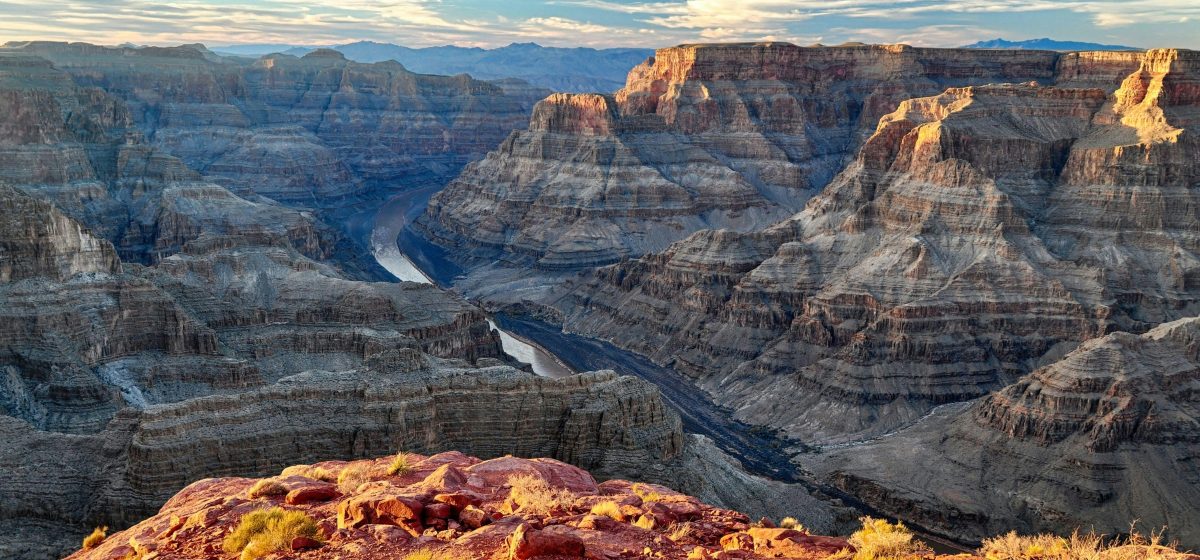
Some of the most important evidence in geology is an absence. Across many landscapes, younger sedimentary rocks rest directly on much older crystalline basement, with a vast interval of geological time missing between them. This boundary, known in prominent examples as the Great Unconformity, is a reminder that Earth’s history is recorded unevenly.

What is an unconformity?
An unconformity is a surface that represents missing geological time. Sediment may stop accumulating, previously deposited rock may be eroded, or both processes may occur before younger layers are laid down. The resulting contact separates rocks formed at different times and under different conditions.
Geologists distinguish several types. An angular unconformity occurs where older tilted or folded layers are overlain by younger strata at a different angle. A disconformity separates sedimentary layers that are broadly parallel but divided by an erosional or non-depositional gap. A nonconformity places sedimentary rock above older igneous or metamorphic basement.
Why the Great Unconformity attracts attention
In parts of the Grand Canyon and other regions, relatively young sedimentary strata lie above much older crystalline rocks. The age difference can represent an immense interval, in some places approaching or exceeding a billion years. The boundary is not one perfectly continuous surface with one single origin everywhere. It is a name applied to a set of related geological relationships observed across different locations.
To understand the gap, geologists investigate several processes: mountain building, uplift, deep erosion, changes in sea level, and later burial beneath new sediment. Different regions may preserve different combinations of these events. That is why field relationships and precise dating matter.
A window into early Earth
The older rocks beneath an unconformity can preserve evidence of early crust formation, metamorphism and tectonic activity. New research on very ancient rocks continues to refine the picture. A Nature research briefing published on 11 November 2026 described 3.95-billion-year-old rocks from northern China. The study reports evidence that altered oceanic crust was buried rapidly to depths greater than 50 kilometres and partially melted.
Such findings are relevant because they show that processes associated with crustal recycling may have operated very early in Earth’s history. They do not mean that modern plate tectonics worked in exactly the same way billions of years ago. Scientists compare mineral chemistry, isotopes, textures and regional geology to determine which interpretations are best supported.
How geologists investigate a missing interval
Field geologists first map the contact and document whether the rocks above and below it are layered, folded, fractured or weathered. Petrography reveals minerals and textures under the microscope. Radiometric dating can constrain when minerals crystallised or were reset by later heating. Geochemical signatures help identify the source of magma and the conditions under which a rock formed.
Geologists also compare distant exposures. If a similar contact occurs across a broad region, it may record a large-scale episode of uplift or erosion. Yet local histories can differ, so correlation requires evidence rather than appearance alone.
Why gaps are scientifically useful
A missing interval can reveal when a landscape was exposed, uplifted or stripped of overlying rock. It can also help reconstruct the changing balance between tectonic activity, erosion and sedimentation. In this sense, an unconformity is not simply a blank page. It is a boundary that records a change in the conditions under which the geological archive was created.
The Great Unconformity remains an active topic because no single explanation fits every occurrence. Continued mapping and improved dating help separate regional histories from broader events in Earth’s evolution.
Sources: Nature — Geology research briefing, 11 November 2026; US National Park Service — Grand Canyon geology.