 q4WsCvLajdd4
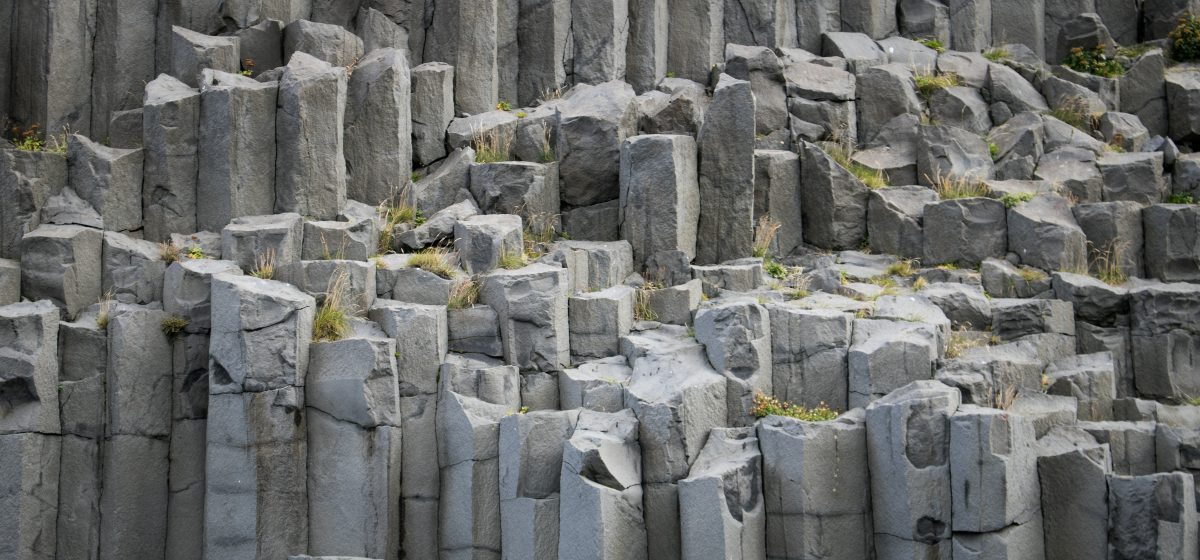
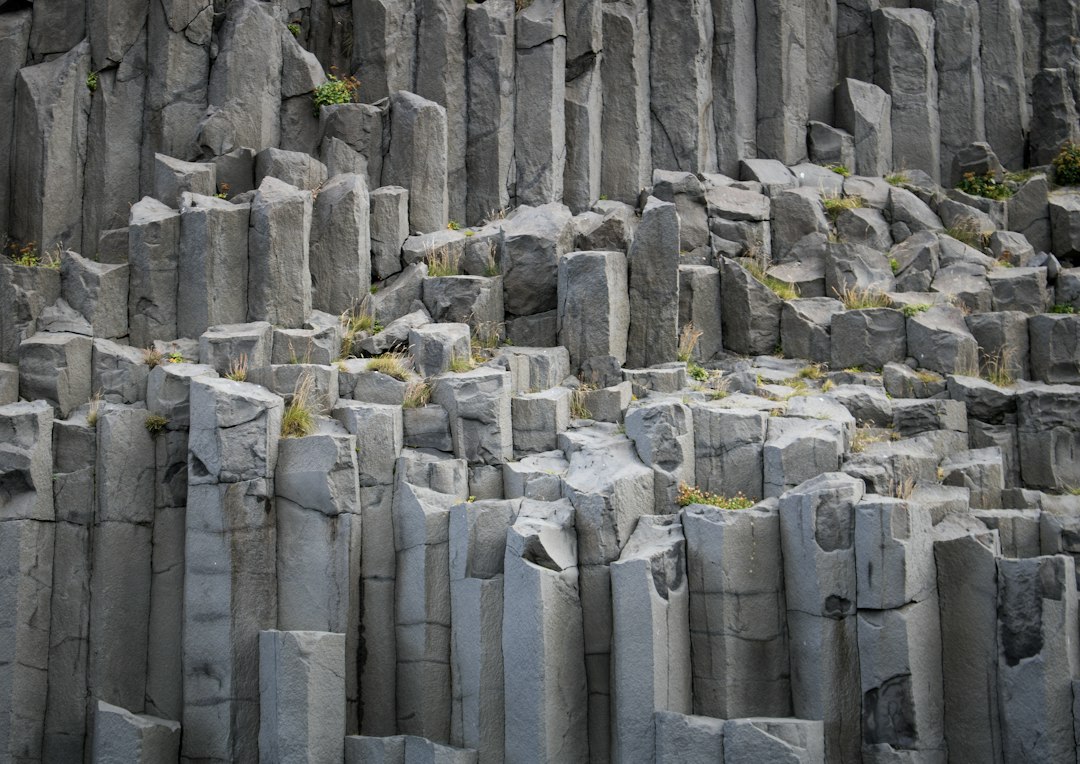
Some volcanic landscapes look as though they were built from carefully stacked stone pillars. In reality, the columns are natural fractures that formed as thick lava cooled and contracted. Columnar basalt is one of the clearest examples of how physical processes can create striking geometric patterns in ordinary rock.
From molten lava to solid rock
Basalt is a dark, fine-grained igneous rock commonly produced by relatively low-viscosity lava. When a large volume of basaltic lava spreads across the ground or fills a valley, the interior can remain hot for a long time even after the surface begins to solidify. As the cooling front moves inward, the rock loses heat and contracts.
Contraction creates stress. When that stress becomes greater than the rock can accommodate elastically, fractures develop. In thick, relatively uniform lava bodies, these fractures can organise into networks that divide the rock into long polygonal columns. The process is called columnar jointing.
Why the columns often have six sides
Many exposures show columns with five, six or seven sides, although the shapes and sizes vary. A roughly hexagonal pattern can develop because it distributes contraction across the rock while reducing the overall energy associated with the fracture network. It is not a perfect, pre-designed pattern: natural columns are irregular, and some have more or fewer sides.
Column diameter is influenced by cooling conditions. In general, slower cooling allows fractures to space themselves farther apart, producing wider columns, while faster cooling tends to create smaller columns. Local differences in lava thickness, water availability, heat transfer and rock composition can produce substantial variation within one exposure.
Cooling fronts and fracture direction
Columnar joints commonly form approximately perpendicular to the direction in which the cooling front advances. In a thick lava flow cooling from its upper and lower surfaces, columns may grow roughly vertically toward the interior. Where cooling occurs against a steep valley wall or another cold surface, the fracture pattern can take a different orientation.
Some outcrops show curved or fan-shaped columns. These patterns can indicate changes in the geometry of the cooling surface or in the direction of heat loss. Geologists use the orientation of columns, the surrounding flow boundaries and the texture of the basalt to reconstruct how the lava body cooled.
Where columnar basalt is found
Columnar jointing occurs in many parts of the world. Famous examples include the Giant’s Causeway in Northern Ireland, Fingal’s Cave in Scotland and basalt exposures in Iceland, India and the western United States. Each location has its own geological history, but the underlying physical process is similar: cooling and contraction of a thick body of igneous rock.
Columnar joints can also form in other volcanic rocks, including some andesites and rhyolites, although basalt is especially well known for the feature. The shape alone is not enough to identify the rock; mineral composition and texture provide additional evidence.
What a column can tell a field geologist
At an exposure, begin by recording the orientation, width and continuity of the columns. Look for changes from the edge of the flow toward its interior. Note whether the columns are straight, curved, broken or weathered into blocks. The relationship between joints and the margins of the lava body can help reveal where cooling began.
It is also important to distinguish cooling joints from tectonic fractures. Cooling joints often form systematic patterns related to the shape of the igneous body, whereas tectonic fractures may cut across several rock units and show evidence of later movement. Multiple observations are needed before assigning an origin.
Weathering turns structure into scenery
Once formed, columnar basalt is modified by weathering, erosion and slope processes. Water can enter joints, widen fractures and help separate columns into blocks. Resistant columns may remain standing while surrounding material is removed, creating cliffs, stacks and stepped landforms. The final landscape reflects both the original cooling pattern and the long history of erosion.
A natural pattern with a physical explanation
Columnar basalt is visually distinctive, but its importance is scientific as well as aesthetic. It provides evidence about lava thickness, cooling direction and the thermal history of volcanic deposits. By reading the geometry of the columns, geologists can reconstruct processes that occurred long before the landscape became visible at the surface.
Further reading: US Geological Survey — volcanic rocks and igneous processes.
Image: Jonathan Larson / Unsplash.