 q4WsCvLajdd4
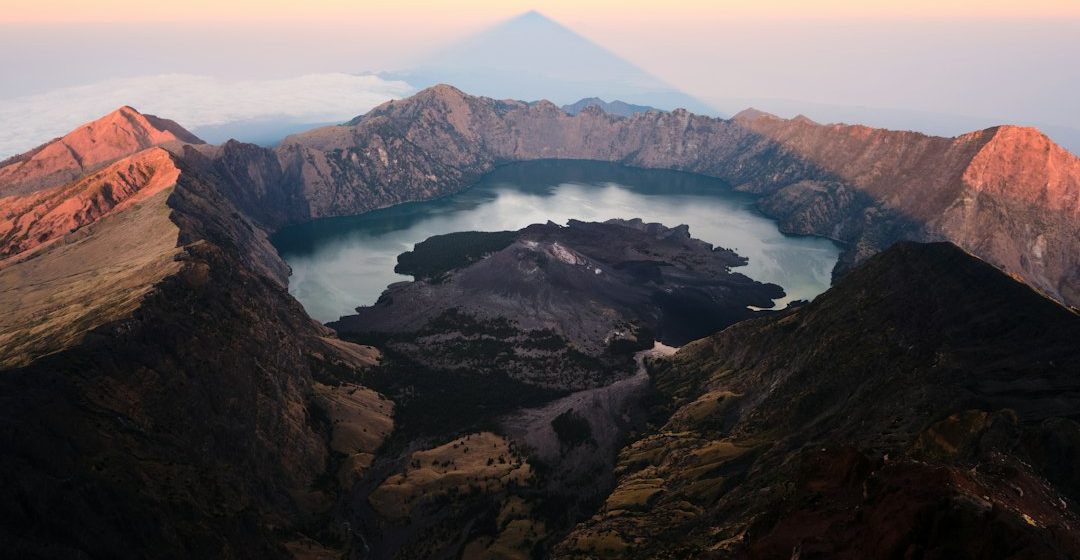
A volcano does not have to erupt lava to release a large volume of gas. A study published online in Nature Geoscience on 19 November 2026 reports satellite evidence for a substantial methane and carbon dioxide outburst at Fentale Volcano in Ethiopia during 2025. The researchers link the event to magma moving underground and interacting with sedimentary rocks that contained older organic material.
A gas release without a surface eruption
Fentale lies in the Main Ethiopian Rift, part of the wider East African Rift system where the continental crust is being stretched. The study describes a major magmatic intrusion that began in December 2024. A sheet-like body of magma, known as a dyke, propagated for roughly 50 kilometres through the crust and remained underground rather than erupting at the surface.
During the following months, satellite instruments detected methane and carbon dioxide around the volcano. The paper estimates that at least 38.2 ± 3.9 thousand tonnes of methane were released between 19 January and 9 April 2025. About 90 per cent of that methane was emitted during the first month. The researchers also estimate at least 2.9 ± 1.0 million tonnes of carbon dioxide over a 14-day period.
Why methane at a volcano is unusual
Volcanic gases are commonly associated with water vapour, carbon dioxide and sulfur-bearing compounds. Methane is usually present only in small quantities in gases from many volcanic systems. Large methane releases are more familiar in some sediment-hosted geothermal areas, where hot fluids interact with organic-rich rocks.
The Fentale setting is important because the East African Rift contains sedimentary basins as well as active magmatic systems. Some of those sedimentary rocks contain organic material and hydrocarbons. If magma intrudes into or heats such rocks, it can change the organic matter and generate thermogenic gas. The gas may then move through fractures if a previously sealing layer is disrupted.
How satellites revealed the event
The researchers combined observations from several satellite systems rather than relying on a single image. Instruments including TROPOMI, GHGSat and Tanager-1 contributed measurements of methane or carbon dioxide, while other satellite data helped track heat, surface changes and ground deformation. This combination allowed the team to connect gas signals with activity inside the caldera.
The strongest reported methane rate was approximately 157 ± 41 tonnes per hour during an observation on 19 January 2025. High-resolution observations later helped locate the emissions within Fentale’s caldera. The paper also describes localised ground subsidence and thermal anomalies during the same period. These independent observations support the interpretation that the gas release was linked to a changing subsurface system.
The proposed magma–sediment mechanism
The authors propose that the intrusion disrupted an impermeable cap that had trapped methane beneath the surface. The methane was likely generated when organic-rich sedimentary rocks were heated over time. Once fractures provided a pathway, the stored gas could escape toward the surface. Carbon dioxide was also released during the event.
This explanation is a geological interpretation, not a direct view of the entire underground pathway. The researchers did not have direct isotope measurements of the methane from the event itself. Instead, they assessed the size of the release, regional geological context and other gas observations to argue that a thermogenic sedimentary source is the most plausible explanation. Further ground-based sampling would help test the model.
What the numbers mean for the climate
Methane is a potent greenhouse gas, so a large natural outburst is scientifically important. However, the paper stresses that this single event is small compared with annual methane emissions from natural and human sources. It should not be interpreted as evidence that volcanoes are a major routine source of global methane. Its importance is that it identifies a previously under-recognised type of short-lived emission that may occur where magma interacts with gas-rich sedimentary basins.
The study also offers a modern analogue for processes that may have occurred in Earth’s past. Large igneous provinces can place hot magma into sedimentary basins over broad areas. If similar interactions released greenhouse gases rapidly, they may have contributed to some ancient climate disturbances. The Fentale event does not prove that one mechanism explains every past warming episode, but it gives researchers a measurable example to investigate.
What the study does not claim
The gas outburst described in the paper occurred mainly in early 2025. The publication date in November 2026 is the date the research became available, not the date of a new eruption. Fentale did not produce a lava eruption during the reported event, and the paper does not forecast an imminent eruption. Satellite observations reveal important changes, but they do not replace local monitoring or establish every detail of the volcano’s current condition.
A new reason to watch the ground beneath volcanoes
The Fentale study shows why volcanic monitoring benefits from looking beyond visible ash and lava. Gas measurements, thermal imagery and ground deformation can reveal interactions between magma and surrounding rocks before or without an eruption. It also highlights how the geological setting matters: a volcano above a sedimentary basin may release gases in ways that differ from a system built mainly within volcanic rocks.
Research source: Dualeh, E. W. et al., “Methane outburst driven by magma–sediment interactions at Fentale Volcano detected by satellite,” Nature Geoscience, published online 19 November 2026. DOI: 10.1038/s41561-026-02137-4.