 q4WsCvLajdd4
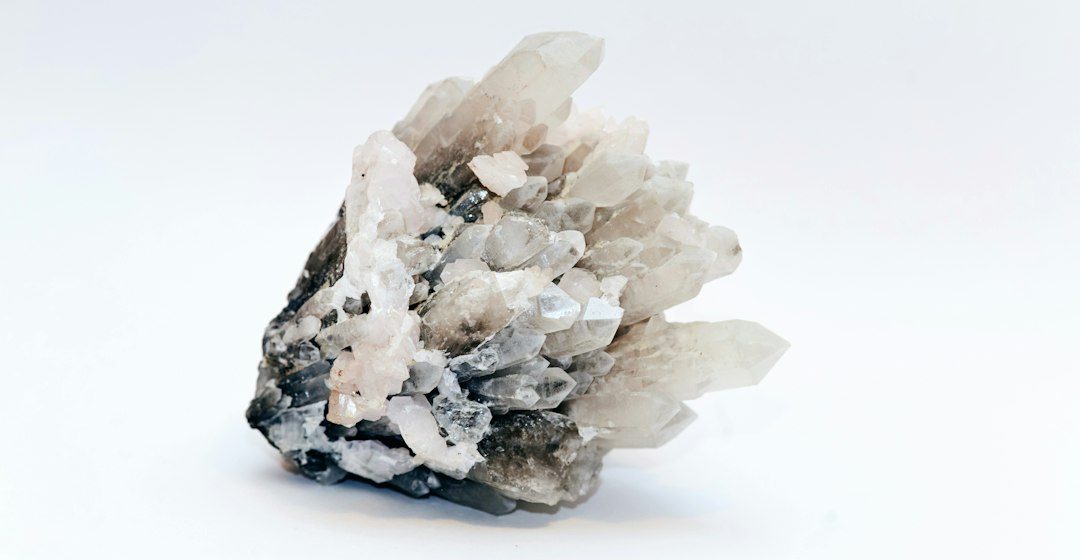
Identifying a mineral is more than matching its colour to a photograph. Many different minerals share similar colours, and a single mineral can appear in several shades because of impurities or weathering. A better approach is to examine a group of physical properties and use them together. This makes mineral identification a repeatable process rather than a guess based on appearance.
Start with the overall appearance
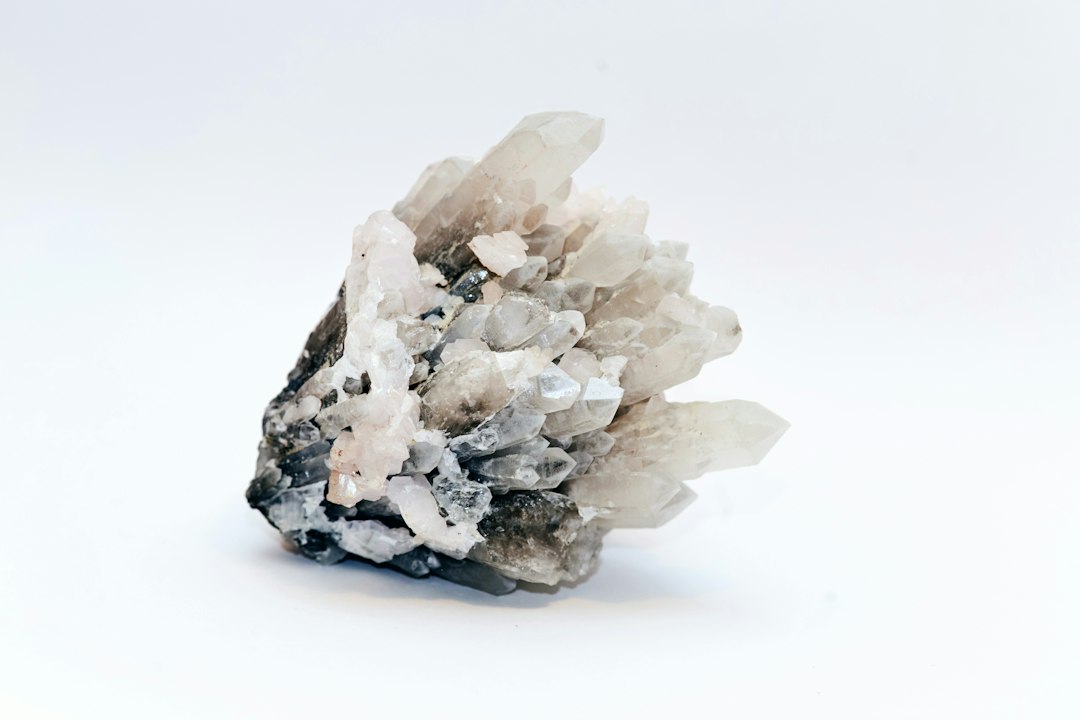
Before testing a specimen, record its crystal habit, lustre and transparency. Crystal habit describes the typical external shape of a mineral or group of crystals. Quartz may form six-sided prisms, while mica commonly occurs as sheets and feldspar often forms blocky crystals. Real specimens are not always complete, so habit is a clue rather than a rule.
Lustre describes how a mineral reflects light. Metallic lustre resembles polished metal; non-metallic examples may look glassy, pearly, silky, resinous or dull. Transparency is another useful observation: a specimen may be transparent, translucent or opaque. These descriptions are more consistent than simply writing that a mineral looks shiny.
Use hardness as a comparison
Hardness is a mineral’s resistance to scratching. The Mohs scale ranks ten reference minerals from talc at 1 to diamond at 10. It is an ordinal scale, not a linear measure: a mineral with hardness 8 is not simply twice as hard as one with hardness 4.
In a teaching setting, a mineral kit and familiar reference materials can help compare hardness. A specimen that scratches a known reference is harder than that reference, while a reference that scratches the specimen is harder. Results should be recorded as a range when the comparison is uncertain. Use only appropriate specimens and supervised classroom methods; do not scratch protected outcrops, building stone or museum samples.
Look for cleavage and fracture
Cleavage is the tendency of a mineral to break along flat planes of weakness in its crystal structure. Mica is well known for splitting into thin sheets. Feldspar commonly shows two cleavage directions that meet at close to a right angle, while calcite has three directions that produce rhombohedral fragments.
Fracture describes breakage where cleavage is absent or not obvious. Quartz often has a conchoidal fracture, producing curved, shell-like surfaces. Some minerals break unevenly or splinter. The shape of a broken surface can be more diagnostic than colour, but a weathered specimen may hide the original pattern.
Streak can reveal a mineral’s powder colour
Streak is the colour of a mineral in powdered form. It is commonly examined with an unglazed porcelain streak plate in a supervised practical session. The powder colour may differ from the colour of the whole specimen. For example, a dark mineral can leave a much lighter streak, while some minerals produce a distinctive coloured mark.
Hard minerals may not leave a streak because they can be harder than the plate. In that case, the test is not useful and should not be forced. Streak is only one property, and it is most valuable when combined with hardness, lustre and cleavage.
Recognising common rock-forming minerals
Quartz is usually glassy, has no cleavage and is relatively hard. It commonly occurs in many igneous, sedimentary and metamorphic rocks. Feldspar is another widespread group. It often shows two cleavage directions and can be white, pink, grey or other colours. Fine twinning lines may be visible on some feldspar surfaces.
Micas are sheet silicates that split into flexible or brittle flakes. Muscovite is typically pale and transparent in thin sheets, while biotite is commonly dark. Calcite is softer than quartz and has three cleavage directions; it is a major mineral in limestone and marble. Amphibole and pyroxene are darker silicate minerals that can look similar, but their cleavage angles and crystal habits help distinguish them.
Why context matters
A mineral rarely occurs in isolation in nature. The surrounding rock provides clues about which minerals are likely and how they formed. Quartz, feldspar and mica commonly occur together in many granitic rocks, while calcite is common in carbonate rocks. In metamorphic rocks, mineral associations can reflect the temperature and pressure conditions experienced during change.
Context should guide an identification, not predetermine it. A dark crystal in a granite is not automatically biotite, and a pale grain in a sandstone is not automatically quartz. Examine the specimen itself and consider alternative possibilities before choosing a name.
Build a simple identification record
A useful mineral worksheet includes the specimen number, crystal habit, lustre, transparency, hardness range, cleavage, fracture and streak where appropriate. Add a photograph and a note about the rock or setting from which the specimen came. If a property cannot be observed, write “not determined” rather than filling the gap with an assumption.
For more complex samples, laboratory methods such as thin-section microscopy, X-ray diffraction or chemical analysis may be needed. Field properties narrow the possibilities, but they do not always provide a unique answer.
From observation to confident identification
The most reliable mineral identifications come from several independent clues pointing in the same direction. Colour may catch the eye, but hardness, cleavage, lustre and geological context provide a stronger basis for interpretation. With practice, students can move from visual guesses to clear descriptions that another observer can test and repeat.