 q4WsCvLajdd4
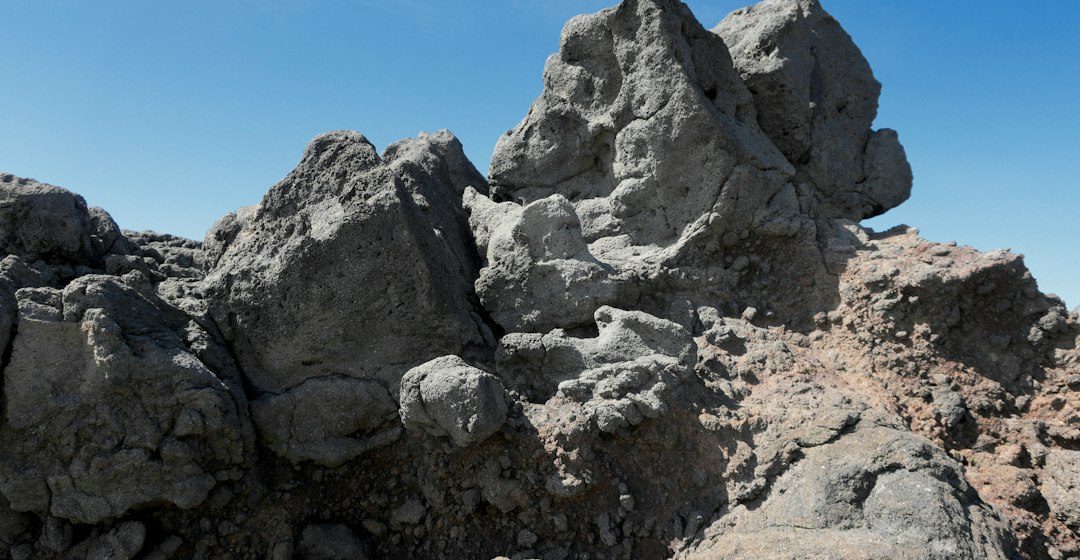
Earth’s magnetic field is generated largely by motion in the liquid outer core. Its direction and strength change through time, and rocks can preserve a record of those changes. The record is not a perfect recording: it depends on the minerals present, the temperature at which they formed and what happened to the rock afterward. Geologists therefore treat magnetic evidence as one line of evidence to compare with fossils, radiometric ages and field relationships.
How magnetic minerals acquire a direction
When iron-bearing minerals crystallise from magma, they may acquire a thermoremanent magnetisation as they cool below a mineral-specific blocking temperature. Tiny magnetic grains become aligned with the field and can retain that orientation after the rock is cold. In sediments, magnetic grains may settle and align as they are deposited, producing a depositional remanent magnetisation. Chemical reactions can also create new magnetic minerals and record a later field.
Reading polarity in a sequence
A compass direction is not enough to identify an ancient polarity. Researchers measure oriented samples in a laboratory and progressively remove weak components that may have been added by weathering or later heating. A stable component can then be compared with the present field and corrected for the rock’s tilt where appropriate. Repeated normal and reversed intervals form a pattern that can be matched with the geomagnetic polarity time scale.
Why reversals are useful
Earth’s field has reversed many times, with magnetic north and south exchanging roles. These reversals are not regular clockwork, and a reversal may take thousands of years rather than happening instantaneously. When basalt on the ocean floor records alternating polarity bands on either side of a mid-ocean ridge, the pattern provides evidence for seafloor spreading. Matching magnetic stripes with dated volcanic rocks helps estimate spreading rates and test plate-tectonic reconstructions.
Limits and checks
A rock may be remagnetised long after it formed. Heating, fluids, deformation and chemical alteration can reset some or all of its magnetic minerals. Sampling several locations, examining mineralogy and testing the stability of the remanence help reveal these problems. A magnetic direction also needs a reliable age before it can be assigned to a particular reversal interval. Where possible, researchers compare the result with independent geological dating.
From laboratory measurements to Earth history
Palaeomagnetism is powerful because it connects microscopic mineral behaviour with large-scale changes in the planet. It can help constrain the latitude of ancient continents, test whether rock units have rotated and identify the timing of ocean-floor formation. The strongest interpretations combine magnetic measurements with structural geology and geochronology. A compass preserved in stone is not a complete history by itself, but it can provide a remarkably durable clue to how Earth has changed.
Further context
A second important distinction is between a direction recorded at formation and the direction measured today. If beds have been tilted after they acquired magnetisation, structural correction can restore the original orientation. Geologists compare directions before and after correction to see which gives the more coherent result. This fold test, where applicable, helps determine whether magnetisation predates or postdates deformation. Similar reasoning applies to conglomerates: if clasts carry random magnetic directions, that can indicate the sediment was deposited after the clasts were magnetised. These tests make palaeomagnetic interpretations more than a simple compass reading.
Putting the evidence together
A practical example: a basalt flow may preserve a magnetic direction when it cools, but later burial or heating can modify that signal. Researchers compare samples from different parts of the flow and check whether the directions cluster after correcting for the orientation of the layers. If the directions are consistent and pass stability tests, the flow may provide a useful point in the polarity sequence. If not, the scatter itself can reveal deformation, alteration or more than one magnetisation event. This is why sampling strategy and geological context matter as much as the instrument reading.
Featured image credit: Oleg / Unsplash.