 q4WsCvLajdd4
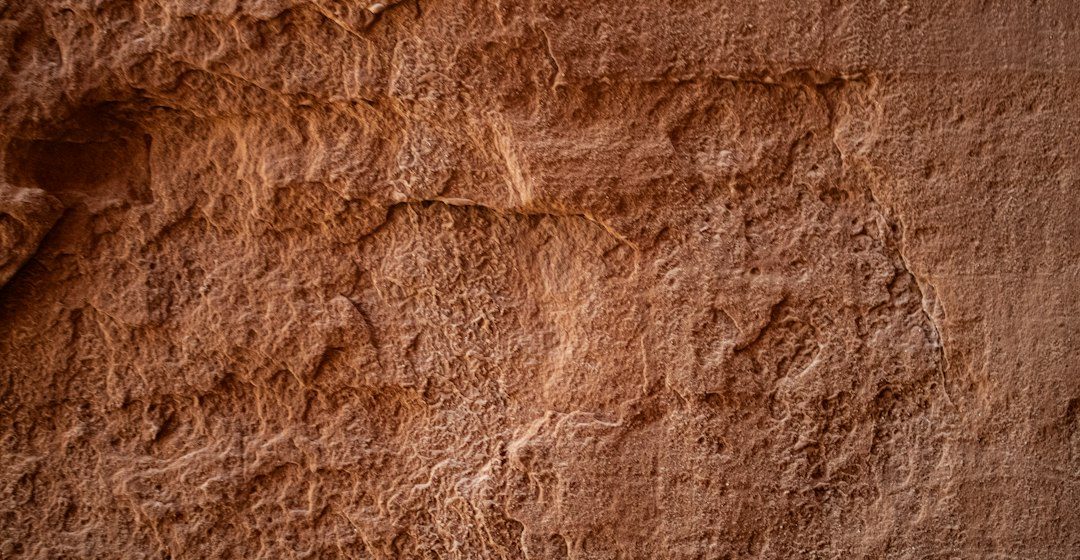
Grain size is one of the first observations to make in a clastic sedimentary rock, but it should be recorded systematically. Sandstone, siltstone and mudstone differ in the size of their particles, not simply in how rough they feel. A hand lens, a ruler and a grain-size chart help make observations repeatable. Note whether grains can be distinguished individually and whether the rock is well cemented or breaks apart easily.
From gravel to mud
The Wentworth scale classifies gravel-sized particles as larger than 2 millimetres, sand as roughly 2 millimetres to 0.0625 millimetres, and silt and clay below that boundary. Mudstone contains fine sediment, while shale commonly splits along thin layers. Conglomerate contains rounded gravel-sized clasts; breccia contains angular ones. These names describe texture and do not by themselves identify the sediment’s source or the environment where it accumulated.
Sorting and rounding
Sorting describes the range of grain sizes in a sample. A well-sorted sandstone has grains of similar size; a poorly sorted deposit contains a broad mixture. Rounding describes the sharpness of grain edges. Transport can make grains more rounded, but source rock, mineral hardness and transport history all influence the result. A short journey can still produce rounded grains if they were recycled from older sedimentary rocks.
What grain size suggests
Coarse sediment often requires enough energy to move larger particles, such as strong currents, floods or debris flows. Fine particles may settle in quieter water, floodplains, lakes or offshore settings. These are tendencies rather than rules. Mud can be carried far in suspension, and coarse deposits can accumulate in channels or at the base of steep slopes. Grain size should be interpreted with sedimentary structures and the geometry of the deposit.
Look beyond the average
A single average grain size can hide important variation. A graded bed may fine upward after a sediment-laden flow loses energy. Cross-bedding records migrating ripples or dunes, while mud drapes may indicate pauses in current activity. Pebbles that are imbricated can reveal a preferred flow direction. Record changes from the base to the top of a bed rather than describing the whole exposure with one label.
A reliable field description
Start with colour and lithology, then record grain-size range, sorting, rounding, matrix and cement. Describe visible structures and the relationship to adjacent beds. If grains are too small to resolve, state that the sample is fine-grained rather than guessing a precise size. A useful description separates what is directly observed from the environmental interpretation. That discipline makes field notes useful to another geologist and reduces the risk of assigning a setting from one feature alone.
Further context
When describing grain size, avoid false precision. In a weathered exposure, grains may be obscured by coatings or cement, and the visible surface may not represent the fresh rock. If a sample contains a mixture, record the dominant fraction and the range rather than assigning a single size to every grain. Photographs can help, but perspective and scale matter: include a ruler or known reference at the same distance from the camera as the grains. A concise, reproducible description is more useful than a long list of uncertain mineral names.
Putting the evidence together
A useful exercise is to compare two beds rather than classify a single hand sample. Record the largest and smallest visible grains, then describe whether the distribution is narrow or broad. If the rock contains pebbles, measure several clasts and note whether their long axes have a preferred orientation. At the same time, look for changes in bedding and sedimentary structures. The combined description may distinguish a channel deposit from a debris-flow deposit more convincingly than a grain-size label alone. In a report, state the scale used and whether the estimate was made visually or with a grain-size comparator.
Featured image credit: Zoshua Colah / Unsplash.