 q4WsCvLajdd4
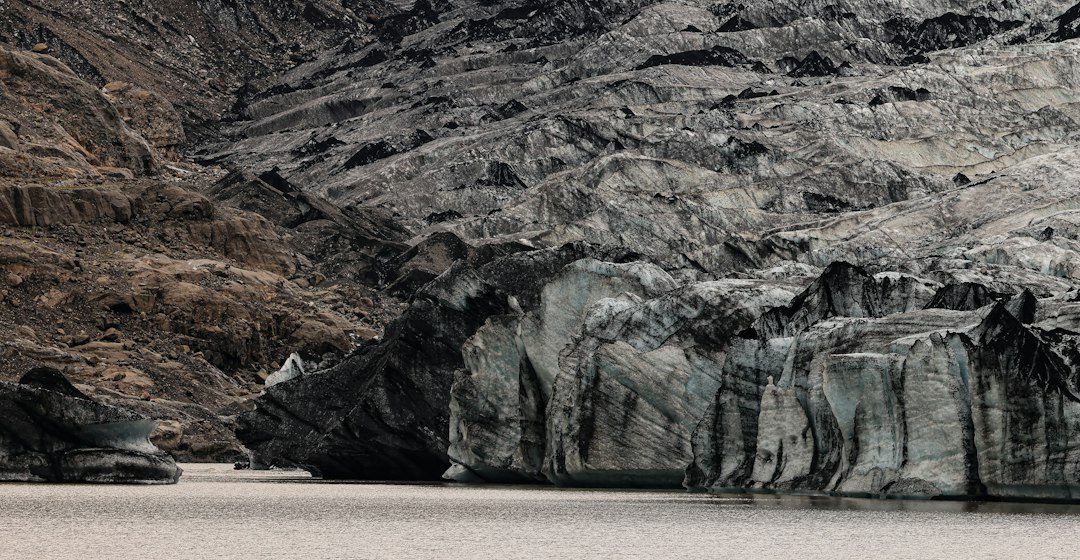
Metamorphism changes the mineralogy and texture of existing rock through heat, pressure and chemically active fluids without requiring complete melting. The resulting rocks preserve evidence of burial, deformation and changing conditions inside Earth’s crust.
The science behind the subject
Minerals may recrystallise, align into foliation or react to form new assemblages stable at different temperatures and pressures. Regional metamorphism is common in mountain belts, while contact metamorphism occurs near hot igneous intrusions.
What the evidence can tell us
Geologists identify index minerals, foliation, compositional banding and reaction textures. Laboratory experiments and thermodynamic models help estimate the pressure-temperature conditions recorded by a metamorphic rock.
A practical way to observe it
Compare the mineral alignment with the direction of foliation and the surrounding structures. Record whether the rock is layered, folded or cut by younger veins, and use a map to understand the regional setting.
Important limits and misconceptions
A metamorphic rock does not necessarily record one simple heating event. It may preserve several stages of burial, deformation, cooling and fluid movement, and some minerals may have been partly reset.
Why this matters
Metamorphic geology reveals how crust is buried, heated, deformed and returned toward the surface. It provides a record of mountain building and the long-term evolution of continental lithosphere.
Putting observations into context
A sound geological interpretation combines field relationships, maps and analytical evidence. A specimen provides information about texture and minerals, while a regional map shows how an exposure relates to surrounding units. Laboratory measurements can test ideas that are not visible to the eye, and clear notes make the reasoning easier for another reader to review.
From evidence to explanation
Geologists often compare more than one possible explanation before choosing an interpretation. A familiar shape or colour can have several origins, and new measurements may change the preferred model. This is how Earth science improves: claims are made testable, uncertainty is described and interpretations are revised when additional evidence becomes available.
Questions for further study
Compare examples from different climates, rock types and tectonic settings. Ask whether the same process produces different landforms under different conditions, and whether a similar-looking feature could have formed by another mechanism. National geological surveys and university teaching resources provide useful maps, datasets and case studies for further reading.
Estimated reading time: 4–6 minutes.