 q4WsCvLajdd4
A new seafloor survey has identified and characterised fourteen hydrothermal vent fields around the Rodrigues Triple Junction in the central Indian Ocean. The research, published in Frontiers in Earth Science on 25 November 2026, adds detailed observations from a region where the Indian, African and Australian plates meet. The work matters because hydrothermal systems are difficult to locate, and their position can reveal how faults, magma and seawater interact beneath the ocean.
What hydrothermal vents are
Seawater can circulate through cracks in oceanic crust, become heated by nearby magma or hot rock, react with minerals and return to the seafloor carrying dissolved chemicals. When the fluid mixes with cold seawater, some dissolved material precipitates. The result can be mineral deposits, altered rock and communities of organisms that rely on chemical energy rather than sunlight.
Vents are not evenly distributed across the ocean floor. They are commonly associated with mid-ocean ridges, volcanic features and faults that provide pathways for fluid circulation. Mapping them helps researchers understand where heat and chemicals move through young oceanic crust.
Why the triple junction is important
The Rodrigues Triple Junction is a meeting point within the Indian Ocean’s spreading-ridge system. The geometry of a triple junction can produce varied crustal structures, including ridge segments, offsets and fault zones. These differences influence how magma reaches the seafloor and how seawater circulates through the rocks.
The newly described vent fields occur in several settings: within an axial valley, along ridge flanks, on an off-axis volcanic plateau and near non-transform offsets. Most are hosted by basalt, a common volcanic rock of oceanic crust. Four fields associated with non-transform offsets and the triple-junction area are hosted by ultramafic rocks or occur on gabbro and peridotite exposed along large faults.
How the team found them
The researchers combined bathymetric mapping, water-column plume observations and self-potential surveys to identify promising locations. Bathymetry measures seafloor shape; plume surveys look for water-column signals that may indicate hot, chemically distinct fluid; and self-potential measurements can help locate electrochemical or fluid-related anomalies. These methods narrow the search area but do not by themselves prove that a vent is active.
The team then used a remotely operated vehicle to inspect and sample the sites. Direct observations and samples of sulfides, host rocks, vent fluids and associated fauna help distinguish a genuine hydrothermal field from a feature inferred only from indirect signals. This combination of broad surveys and close-up confirmation is essential in deep-sea work, where ship time and visibility are limited.
What the rock types reveal
Basalt-hosted systems are associated with the volcanic crust formed as magma cools at spreading ridges. Ultramafic rocks such as peridotite originate deeper in the mantle and can be exposed where faulting brings them upward. Gabbro is a coarse-grained igneous rock that crystallises deeper within oceanic crust. Finding vents in different host rocks gives researchers a way to compare how rock composition and structure affect fluid chemistry.
Faults can create pathways for seawater to descend and hot fluids to rise. Where peridotite reacts with seawater, chemical reactions may produce hydrogen and other compounds that influence vent-fluid chemistry and microbial ecosystems. The exact reactions depend on temperature, rock composition and water-rock interaction, so the presence of ultramafic rock does not mean every site behaves identically.
What the discovery does—and does not—mean
Fourteen newly characterised fields expand the known distribution of hydrothermal activity in the central Indian Ocean. They provide samples and mapped locations for future work on crustal formation, chemical exchange and deep-sea ecosystems. They do not establish that all vents in the region have been found, nor do they show that every field has the same activity level or ecological importance.
The survey also does not imply an immediate hazard to people or shipping. Hydrothermal venting is a natural process occurring on the seafloor. The scientific value lies in understanding how the oceanic crust works and how its chemical environments vary across different geological structures.
Why detailed seafloor mapping matters
Hydrothermal systems link tectonics, heat flow, chemistry and biology. A mapped vent field is a place where those processes can be studied together. As additional surveys sample different ridge segments and fault settings, researchers can test whether the patterns observed around the triple junction apply more broadly or reflect its unusual geometry.
The study is a reminder that the seafloor is not a uniform volcanic surface. It contains varied rock types, fault networks and fluid pathways, many of which remain poorly explored. Better maps and direct samples turn indirect clues into a clearer account of how Earth’s oceanic crust forms and exchanges material with the sea.
Research source: Isler, T. et al., “Fault-controlled hydrothermal activity and volcanic architecture at the Polaris vent field (Gakkel Ridge) revealed by high-resolution bathymetry and photogrammetry,” Frontiers in Earth Science, published 25 November 2026. Research article.
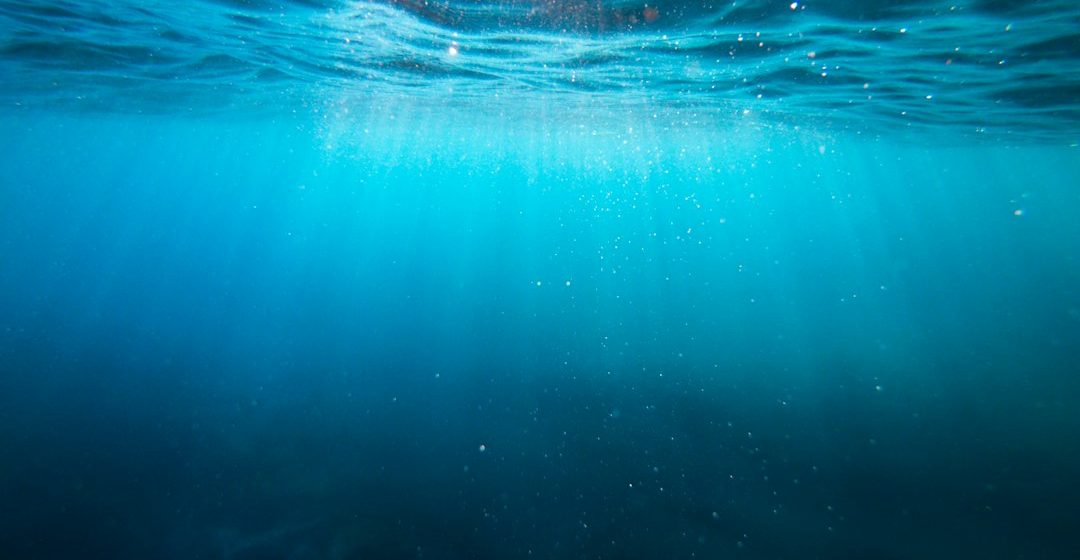
Image: Underwater scene. Photo by Cristian Palmer / Unsplash; illustrative image, not a photograph of the surveyed vent fields.