Metamorphism: How Heat and Pressure Transform Rock
Metamorphism changes the mineralogy and texture of existing rock through heat, pressure and chemically active fluids without requiring complete melting. Th
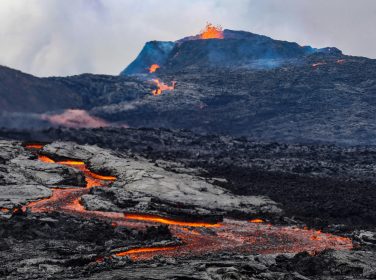
Igneous textures preserve clues about how magma or lava cooled. Crystal size, shape and arrangement can reveal whether molten material solidified slowly un
Earth's lithosphere is divided into moving plates that interact at divergent, convergent and transform boundaries. These settings help explain the global d
The rock cycle describes the transformations that connect igneous, sedimentary and metamorphic rocks. It is not a fixed sequence: any rock can be uplifted,
A caldera is a broad volcanic depression formed when the ground collapses or subsides after a large volume of magma is withdrawn from a shallow reservoir.
Alluvial fans are fan-shaped sediment deposits that form where streams emerge from confined valleys onto flatter terrain. They are common in arid and
Columnar basalt is a striking volcanic rock formation in which cooling lava is divided into long, polygonal columns. The geometry is natural: it devel
Bedding records the layering of sedimentary rocks and provides a reference for reconstructing how strata were deposited and later deformed. Its orient
A geological map shows the distribution of rock units and structures at or near the Earth's surface. Its colours are not decoration: they represent ma