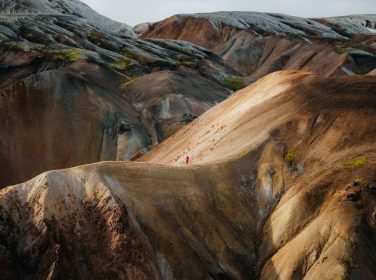
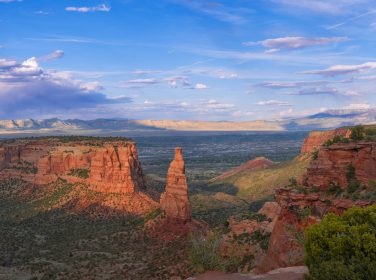
Why the Colorado Plateau’s Red Rock Layers Reveal a Long Story of Changing Landscapes
Explore how ancient environments, tectonic uplift and erosion shaped the Colorado Plateau's red rock landscapes.
Salt flats develop where water collects in a closed basin and evaporates, leaving dissolved minerals behind. Death Valley's playa surfaces preserve a chang
White Sands in New Mexico is known for its bright dune field, which is unusual because the dunes are made largely of gypsum rather than the quartz sand com
The Basin and Range Province is recognised by alternating mountain ranges and broad valleys. Much of this pattern developed as the crust stretched and brok
The Rio Grande Rift is an extensive zone where the continental crust of the southwestern United States has been stretched. Its basins, fault scarps and vol
A Geological Society of America announcement on 14 October 2026 highlighted a gathering focused on how changing water resources shape riverscapes and commu
A river delta forms where a river enters a standing body of water and deposits sediment faster than waves, tides and currents can remove it. Deltas ar
Alluvial fans are fan-shaped sediment deposits that form where streams emerge from confined valleys onto flatter terrain. They are common in arid and
Karst landscapes develop where soluble rocks, especially limestone, are dissolved by water. Sinkholes, disappearing streams, springs and caves are sur
Coastal fieldwork brings together sedimentology, geomorphology and ocean processes. Cliffs, beaches, dunes and tidal platforms preserve evidence of ch